

Shy Girl is a “femgore revenge” horror novel in which the protagonist, a poor woman with mental health struggles, enters into a doomed arrangement with a wealthy man who pays her to live as his human pet. Initially self-published in February 2025, the book gained traction online and received hundreds of positive reviews on the book review website Goodreads (Its score still stands at 3.5 out of 5 stars). It was then picked up by Hachette Book Group in June and published in the UK in November. After the New York Times provided evidence last week that the text was AI-generated, its upcoming US publication was cancelled and the title was removed from the Hachette website, making headlines as the first traditionally published book to be the center of an AI controversy.
The publisher announced that they had decided to pull the title after reviewing it internally, but many readers voiced their suspicions about how it was written long before that. An AI detection program flagged 78% of the text in Shy Girl as AI-generated back in January. This was closely followed by a video posted by YouTuber frankie’s shelf, which complained that Ballard was “an astoundingly bad writer.” They speculated that the book was not wholly AI-generated but “she worked with Chat GPT to pad [it] out.” The descriptions, “of which there are way, way too many,” and excessive repetition of different words and phrases were picked up as potential clues about AI assistance. The internet helped legitimize the novel in the eyes of the publishing world, and it prompted that legitimacy to be taken away again.
It is perhaps not surprising that Ballard denies using AI, although she claims that a collaborator who helped with the self-published version of the novel worked with AI tools. “My name is ruined for something I didn’t even personally do,” she protested in response to the controversy. A public statement from Hachette reaffirmed their commitment to “original creative expression and storytelling.”
In an environment where regular readers are becoming ever more niche, it makes sense to listen more closely to their preferences and desires. Of course, that has never been easier due to BookTok. This phenomenon has overseen an explosion of short-form video creators with content dedicated to reading and book fandom. It has turned into a lifeline that a chunk of the publishing industry has come to depend on. In 2024, around 59 million print book sales in the US could be attributed to BookTok’s influence.
Fitting with TikTok’s reputation for producing a high volume of ultra-specific slang terms and vocabulary, one of the biggest successes of BookTok has been the categorization of books into ultra-specific genres and tropes that readers like to see in their literature. “Dark academia,” involving books with a gothic and mysterious undertone that often focus on academic life, is one of the most notorious of these. “Enemies to lovers,” a type of romance novel in which the relationship between the main characters develops from one extreme to another, is also popular. The “femgore,” that inspires Shy Girl, a gruesome, female-focused subgenre of horror, arguably falls under these groupings too.
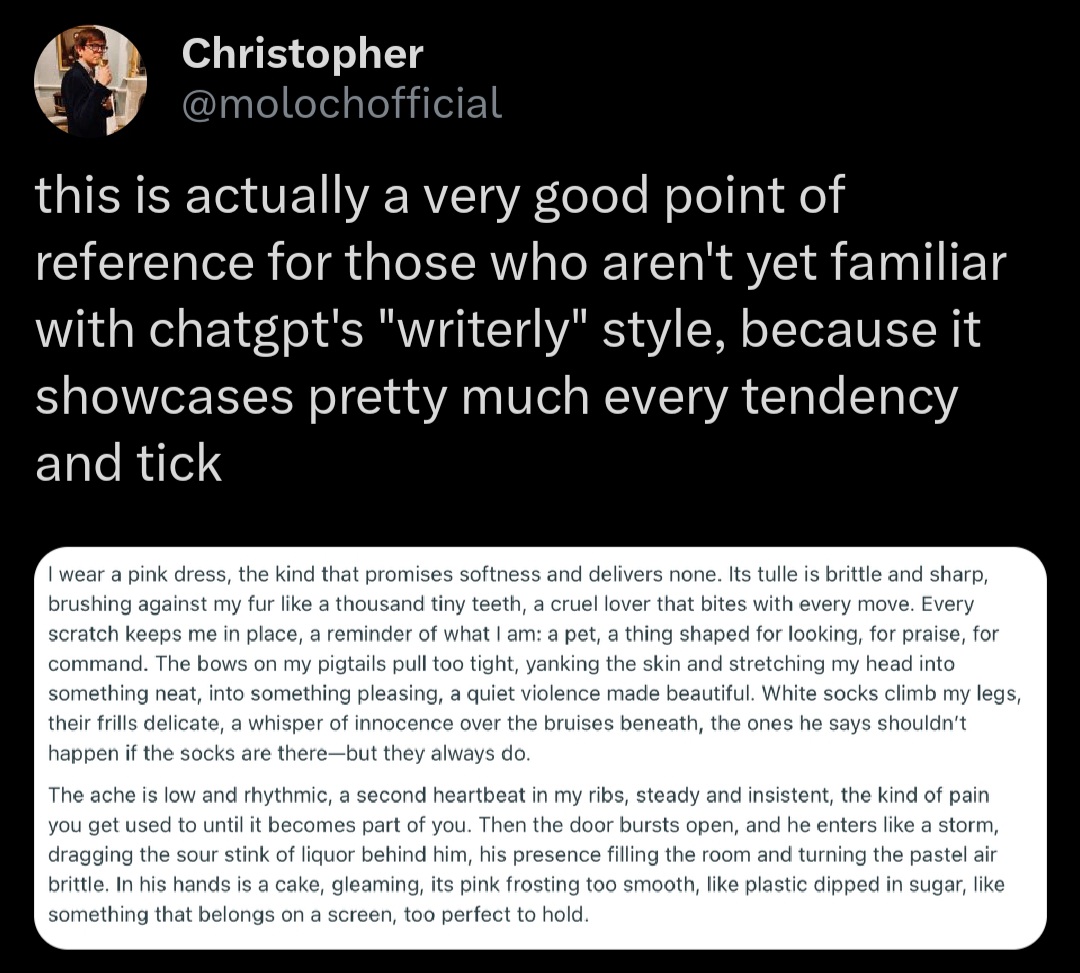
The issue is when a collection of popular themes and an audience who will likely promote them are prioritized over giving the text and the author behind it the proper scrutiny it deserves. In a Substack article dissecting the fallout from the Shy Girl drama, publisher Brooke Warner criticized AI-generated fiction as plagiarism and called for younger, more trend-focused editors and older, more scrupulous ones to work together and find a balance between crowd-pleasing and upholding standards. “We’re all in this together… writers, publishers, and readers. The center of this controversy is how we feel about the irreplaceable thing that gets lost when human expression is devalued—and what we’re going to do about it.”
Just because the commercial and sometimes even critical success is dependent on online opinion does not mean that it should allow other factors to be overlooked. This is something that is even more important today, when anybody can get an LLM to write a book. Avid fiction readers keep coming back for more because they enjoy the art form, not just a simulacrum of it.
Following the desires of those buying books and how they like to be marketed to is undoubtedly an essential part of publishing, now more so than ever. At the same time, a level of quality control is a key part of retaining loyal readers. They may know what they like, but that doesn’t mean that they are not willing to be surprised by exceptional writing. At least at this point, most do not think they are going to find it with artificial intelligence.
